Save Money This Year by “Going Solar”
 Authors:
Todd L Sack MD FACP
Pete Wilking, MBA, NABCEP, Licensed Solar Contractor
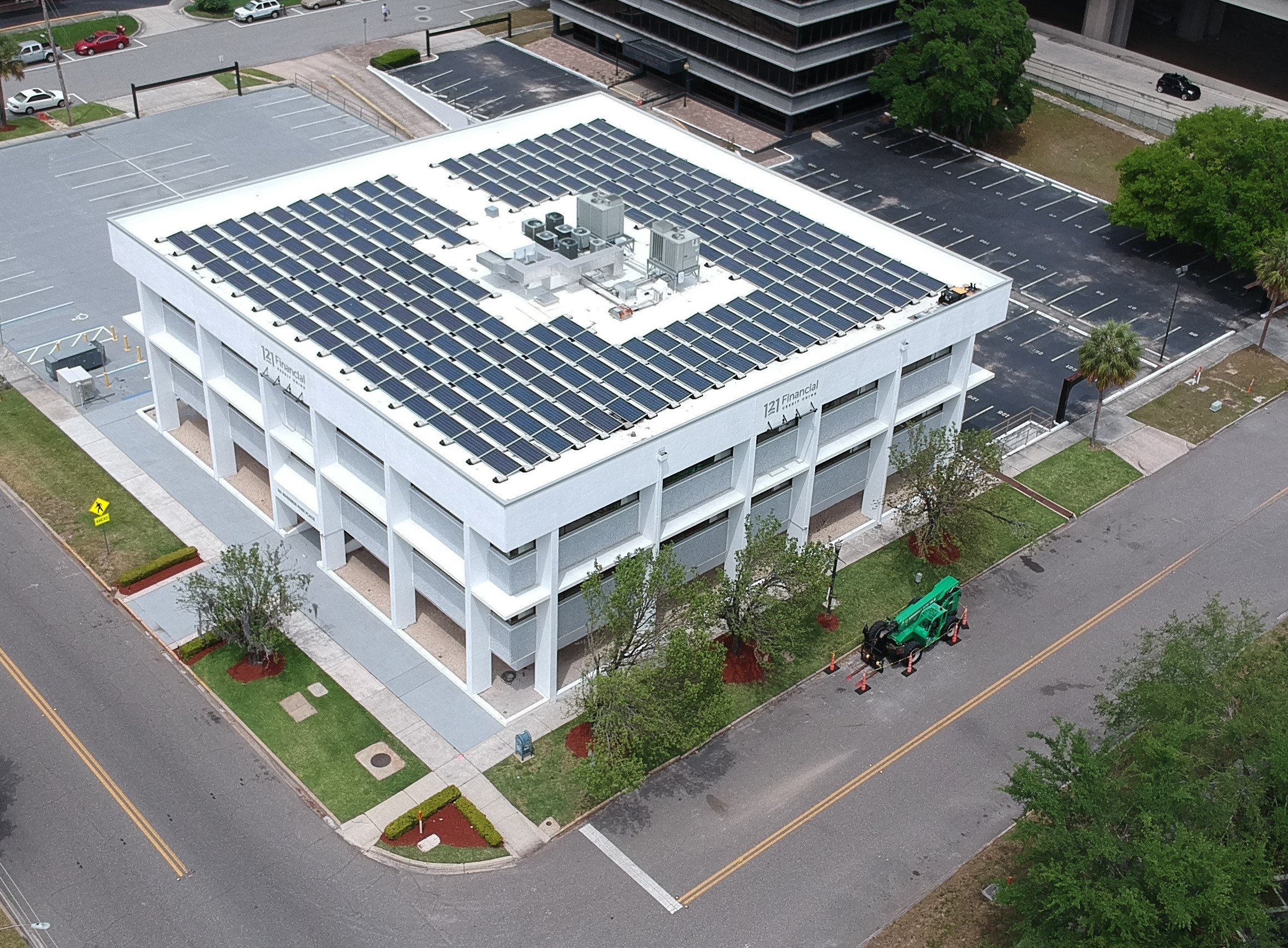
Now may be the time to add solar panels to your home or healthcare practice. We offer six reasons why “going solar” could be your best financial decision this year.
It may surprise you that the cost of electricity is not a particularly strong reason to install solar panels this year. Electricity prices have been stable or even decreased slightly over the past year in most of the United States and in other countries. This is because much of the World’s electricity is generated by burning fossil fuels, and the decreased demand for these during the COVID-19 recession has made these fuels less expensive for utility companies.
The best argument for solar in 2020 is that it makes great financial sense. The price of solar panels has fallen dramatically over the past twenty years. Solar panels to generate electricity (“photovoltaic panels”) are highly efficient if your building or home has a suitable roof: generally facing south, east, or west in the Northern Hemisphere, and without shade.
“The best argument for solar is that it makes great financial sense.”
It is important to keep in mind that your goal is to save money by generating only part of your electricity from the sun. You will continue to buy some power from the electric utility. Some solar shoppers hope to get “off-grid” or to achieve “net-zero” energy use, but in most cases what makes the best financial sense is to buy fewer solar panels and not to invest in expensive batteries.
The table on the right shows the financial benefit of a typical rooftop solar photovoltaic installation in Florida. Florida is often cloudy and so has only average “solar resources”1; buildings in sunnier states  may do better. In this example, the savings from lower electric bills, tax credits, and other benefits come to $34,377 over the 30-year life of today’s solar panels. Solar panels are available for creating hot water as well. Ask your solar consultant or installer whether solar-thermal panels or the new, efficient “hybrid-electric” water heater (heat pump based) is the best deal for your building.
Another use for rooftop panels is to heat swimming pools. Solar pool heating is the most cost-effective way to heat a pool though your investment in solar pool heating will not qualify for the Federal tax credit. If you are choosing between buying swimming pool solar heating and photovoltaic panels that generate electricity, the latter will provide by far the best financial payoff for the use of your roof.
The second reason to consider solar this year, at least in the United States, is that the Federal tax credits are waning. American homeowners or business owners who contract to by December 31, 2020 to install solar panels will receive a 26% tax credit; this credit shrinks for 2021 and then expires for homeowners. For businesses, the credit will be 10% after 2021. This Federal tax credit is worth $3000 or more to most buyers this year; some states and utilities offer additional generous incentives such as Solar Renewable Energy Credits (SRECS) which can create an additional revenue stream for the practice.
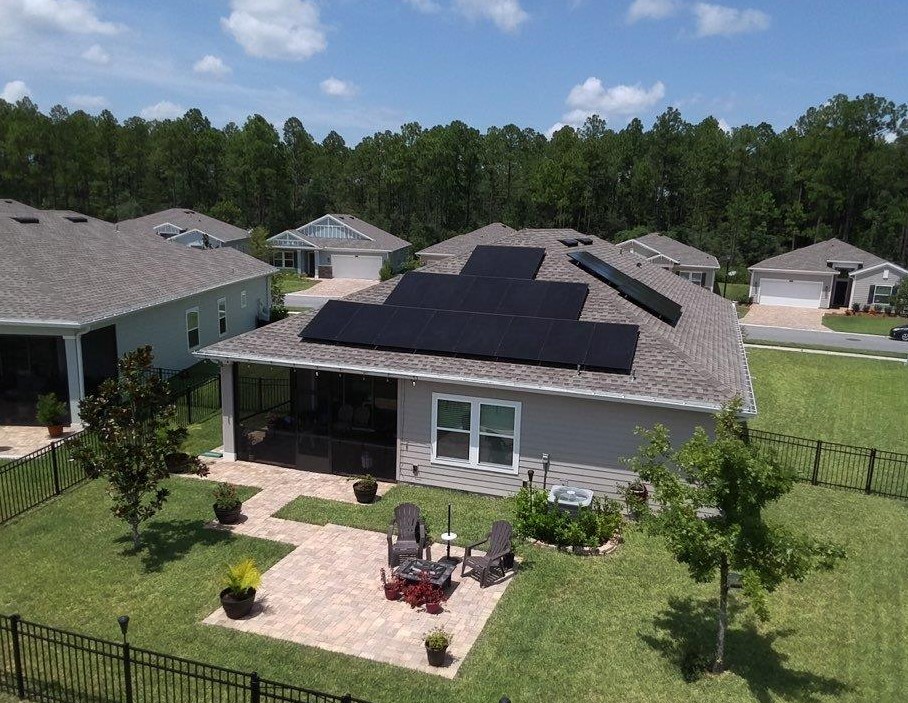 The third reason to make your decision this year is the historically low interest costs for borrowing money to pay for installing your solar panels. It is likely that interest rates will rise after the current recession; acting now may save the borrower $2000 or more over ten years. Many solar installers offer $0 down credit-based financing for residential customers. There are many ways for businesses to finance solar projects, from traditional loans to capital leases and operating leases. Leasing is an operating expense that has the added benefit of being tax-deductible for businesses. Businesses in the U.S. also can take advantage of the Modified Accelerated Cost Recovery System (MACRS) depreciation. Your local solar installer or consultant can explain all the incentives available in your area, or you can find this information at www.dsireusa.org.
A fourth advantage of solar panels comes when you sell your property. The National Bureau of Economic Research estimates that a home with rooftop solar earns a 4% higher sales price when compared with the same home without panels. A study in the Appraisal Journal estimates the increased home value to be at least 20x the value of the annual solar electricity produced, typically an increased sales price of $25,000 or more.
“Your patients will notice and be pleased!”
The fifth reason for solar panels is how “going solar” helps the “culture” of your business or home. People are proud to live or to work in a renewable energy building. They commonly become eager to turn off lights, to recycle, to look for ways to save water, and to make other environmentally-friendly, money-saving choices. A “green” office has tangible benefits for the morale of your colleagues and for the public image of your practice. Your patients will notice and be pleased!
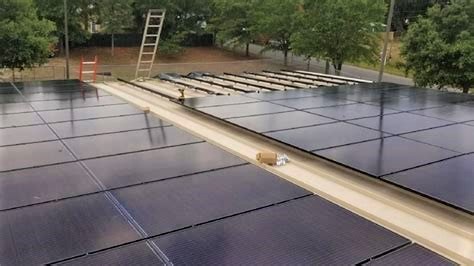 The sixth and perhaps most important reason to choose solar electricity is the health of your patients and of your community. The electricity company does not need to burn as much dirty fossil fuel when we instead generate power from the sun. The image to the left shows rooftop panels being installed in 2019 at the Escambia County Health Department (ECHC) in Pensacola, Florida, USA. Those panels are saving the clinic more than $6,000 per year but also are lowering air pollution such as asthma-producing nitrous oxide and climate-warming carbon dioxide. Learn more about ECHD at https://mygreendoctor.es/profiles/.
Solar is a low-risk investment that serves as a protection against future electricity rate increases while reducing operating expenses and making a statement about the practice’s commitment to sustainability. The time to act is now before the Investment Tax Credit drops for homes and businesses after December 31. Learn your options today by calling a local qualified renewable energy consultant or solar installer who has the appropriate licenses and industry certifications to guide you through the process for your business, home, or both.
Now is the time to save money and to position your practice as forward-thinking, energy-savvy, and community-conscious.
Reference:
1) https://commons.wikimedia.org/wiki/File:SolarGIS-Solar-map-North-America-en.png/
About the Authors:
 Todd L Sack MD, FACP is Editor of My Green Doctor, the world’s leading environmental sustainability program for outpatient healthcare offices, clinics, bureaus, and other facilities. The service is free. Register today at www.MyGreenDoctor.org. Please tell your colleagues and your solar installer about My Green Doctor!
 Pete Wilking is a Licensed Solar Contractor, and the CEO & founder of A1A Solar Contracting, Inc., a Veteran-Owned Small Business. A1A Solar Contracting is one of the top-rated photovoltaic and renewable power design-build service providers in NE Florida, USA. He is a public speaker on renewable power systems and energy management. Email pete@A1Asolar.com.